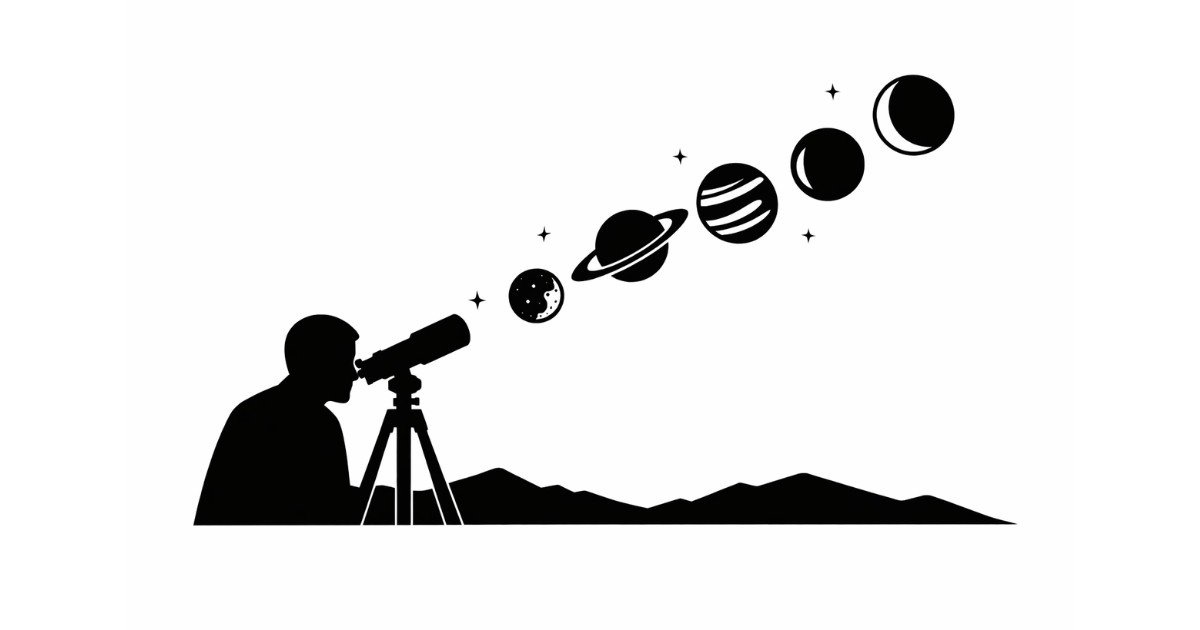
Rare Planetary Parade will light up February skies as six planets align in a spectacular event. Here is how to watch the Rare Planetary Parade in India, viewing tips, timings, and expert guidance.
Rare Planetary Parade is set to capture national attention as six planets appear aligned in the night sky this February. Skywatchers across India are preparing for this unusual celestial moment that blends science with simple visual wonder.
The term Rare Planetary Parade describes a visual grouping where multiple planets appear along the same path in the sky. Though each planet moves in its own orbit, there are moments when they seem arranged together from Earth’s point of view.
Astronomers say Rare Planetary Parade offers a valuable chance for public engagement with astronomy. If skies remain clear, many regions in India will be able to witness this event without complex equipment.
What Makes This Alignment Special
A planetary parade does not mean planets form a perfect straight line in space. Instead, they appear aligned along the ecliptic, which is the path traced by the Sun across the sky.
This February alignment is notable because six planets are expected to be visible within a narrow arc. Such large groupings do not happen frequently, which explains the excitement around Rare Planetary Parade this year.
Experts note that smaller alignments occur more often, but six visible planets at once create a stronger visual impact and wider public curiosity.
Planets Expected to Be Visible
Observers may be able to spot Mercury, Venus, Mars, Jupiter, Saturn, and Uranus, depending on weather and local viewing conditions. Some of these planets will shine brightly and can be seen with the naked eye.
Venus and Jupiter are usually the easiest to identify due to their brightness. Mars may appear as a reddish point, while Saturn and Mercury might require clearer horizons.
Using binoculars can improve the experience, especially for dimmer planets that are harder to detect in areas with light pollution.
Best Time to Watch in India
Timing plays a crucial role in observing Rare Planetary Parade. The event will likely be most visible shortly after sunset or before sunrise, depending on the date and location.
Experts recommend checking local sunset times and allowing the sky to darken properly before attempting to identify the planets. The window for viewing may be limited, as some planets set quickly after dusk.
Missing the right time could mean losing sight of one or more planets in the alignment.
Choosing the Right Viewing Spot
To fully enjoy Rare Planetary Parade, selecting a good location is important. Areas away from bright city lights offer clearer visibility and better contrast.
Rural fields, open terraces, coastal belts, and hill stations provide wide horizons that make spotting low lying planets easier.
Urban observers may still catch brighter planets, but heavy light pollution can reduce the number of visible objects.
Equipment and Observation Tips
One of the most appealing aspects of Rare Planetary Parade is that it does not require advanced equipment. Many planets will be visible without telescopes.
However, telescopes can reveal surface details such as Jupiter’s moons or Saturn’s rings. Amateur astronomy groups in several cities may host public viewing sessions to help beginners.
Simple preparation, such as allowing your eyes to adjust to darkness for at least fifteen minutes, can significantly improve visibility.
Weather and Sky Conditions
Weather will be the deciding factor for many viewers. Clear, dry skies offer the best chance to observe the alignment.
Cloud cover, haze, or pollution can block the view entirely. Observers should track local weather updates closely in the days leading up to the event.
Winter conditions in several Indian states may provide stable atmospheric clarity, improving chances of a successful sighting.
Scientific Context Behind the Event
Rare Planetary Parade provides a practical example of how planets share similar orbital planes around the Sun. Because they orbit in roughly the same flat disk, they often appear along the same line in the sky.
This alignment does not indicate physical closeness between planets. In reality, vast distances still separate them.
Astronomy educators highlight such events to explain orbital motion and Earth’s perspective in observing the solar system.
Public Interest and Social Media Buzz
Interest in Rare Planetary Parade has grown rapidly on social media platforms. Amateur photographers and space enthusiasts are sharing guides, countdowns, and viewing tips.
Astronomy clubs expect increased turnout during observation nights. Community gatherings may take place in parks, school grounds, and science centers.
The excitement reflects a broader curiosity about space and celestial events among young audiences.
Guidance for First Time Skywatchers
Beginners are advised to start by locating the brightest object after sunset, often Venus. Once one planet is identified, scanning along the arc of the sky can help locate others.
Mobile applications that map the night sky can assist in identifying planetary positions. These tools use real time data to guide users accurately.
Patience and practice are important, especially for those observing planetary groupings for the first time.
Safety and Viewing Comfort
Unlike solar eclipses, this alignment does not pose any eye safety risks. It can be viewed safely without special glasses.
Observers should avoid looking at bright phone screens before viewing, as it affects night vision. Warm clothing may be necessary in cooler regions during evening observation.
Comfortable seating and stable surfaces for binoculars can improve the overall experience.
Photography and Documentation
Photographers planning to capture Rare Planetary Parade should use tripods for stability. Long exposure settings may enhance planetary brightness against the dark sky.
Including landscape elements such as trees or skylines can create compelling compositions.
Clear weather and minimal movement are essential for sharp planetary images.
Frequency of Such Alignments
While planetary alignments are not extremely rare in astronomical terms, visible groupings of six planets remain uncommon.
Most alignments involve fewer planets or occur under less favorable viewing conditions. That is why this February event stands out.
Astronomers note that future alignments will occur, but not always with such convenient timing for observers in India.
Educational Outreach and Community Events
Schools and science institutions may organize awareness programs linked to Rare Planetary Parade. Public lectures and interactive sessions can help explain the science behind the event.
Planetariums often schedule special shows to demonstrate how alignments appear from Earth.
Such activities strengthen interest in science and encourage observational learning among students.
Separating Facts from Myths
Planetary alignments have historically inspired myths and speculation. However, scientists confirm that Rare Planetary Parade has no impact on Earth’s gravity or natural systems.
There is no evidence connecting alignments to disasters or unusual events.
Experts emphasize that this is a predictable and natural astronomical occurrence.
What Happens After the Alignment
After the peak viewing period, planets will gradually move apart as they continue orbiting the Sun. The visual grouping will slowly disperse over days and weeks.
Because each planet travels at a different speed, the alignment will not remain stable for long.
Observers who miss the February window may need to wait for another favorable grouping.
Why This Event Matters for India
India has a long history of astronomical observation and scientific achievement. Rare Planetary Parade provides another opportunity to inspire curiosity about space.
With growing interest in planetary missions and space research, public engagement events like this build awareness and enthusiasm.
As February nights unfold, the sight of multiple planets sharing the sky will remind viewers of the dynamic yet orderly structure of our solar system.
Rare Planetary Parade ultimately serves as both a visual spectacle and an educational moment, encouraging people across India to look up and connect with the universe beyond daily life.
Also Read: 7 Urgent Updates as Saudi Arabia Faces Red Alerts as Major Sandstorm Hits the Region
Follow us on google news: Click Here